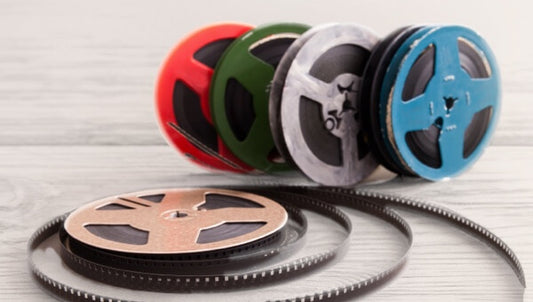

If you have a box of old camcorder tapes at home, you may be trying to understand the difference between 8mm and MiniDV. Both formats were widely used for personal video recording, and many families relied on them to capture birthdays, holidays, and everyday moments. Because the tapes are small and often stored together, it can be difficult to tell which format you have without the original camcorder. That confusion matters, since these formats record video in very different ways and require different methods for playback and transfer. Knowing how 8mm and MiniDV differhelps you choose the right preservation approach and avoid mistakes that could damage your recordings.
Jump to:
Why People Confuse 8mm and MiniDV
Most confusion comes from appearance and timing. Both formats were designed to be compact and easy to use. They replaced bulky VHS camcorders and became popular with families who wanted better portability. When you look at them today, both tapes feel small and lightweight, especially compared to VHS.

Although they look similar, 8mm and MiniDV store video using different recording technologies.
Naming also adds to the problem. The term 8mm refers to tape width, not quality or generation. MiniDV sounds similar, yet it refers to a digital recording format. Many people never learned those distinctions. They simply remember switching to a “smaller tape” at some point.
Another common reason is mixed collections. One household might have used 8mm camcorders in the 1990s, then upgraded to MiniDV in the early 2000s. Years later, those tapes end up stored together with no clear labels.
Recording Technology
8mm and MiniDV differ most in how video is recorded.
8mm tapes use analog recording. Video and audio are stored as continuous magnetic signals on the tape. Formats like Video8 and Hi8 improved quality over time, but they remained analog. Because the signal is continuous, any wear or damage becomes visible during playback.
MiniDV, on the other hand, records video digitally. The image and sound are stored as data rather than a flowing signal. This allowed for more consistent quality and easier editing when the format was new. It also introduced timecode and better synchronization.
These recording differences shape everything else, from image quality to long-term reliability.
Video Quality Differences
In general, 8mm video appears softer. Standard Video8 has limited resolution, and even Hi8 lacks the crispness of digital footage. Analog noise, tracking lines, and slight image instability are common, especially on older tapes.
MiniDV footage looks cleaner. Edges are sharper, and motion appears more stable. Digital recording reduced many of the visual flaws people accepted with analog video.
Typical visual differences include:
- Softer focus and mild distortion on 8mm
- Sharper detail and stable frames on MiniDV
- Gradual fading on analog versus sudden glitches on digital
While MiniDV usually looks better, its failures tend to be more abrupt when they happen.

Digital recording reduced many image issues that viewers once accepted with analog footage.
Audio Quality Differences
Audio follows a similar pattern. 8mm audio is analog. Over time, tapes can develop hiss, muffled voices, or uneven volume. Background noise often increases as the magnetic signal weakens.
MiniDV audio is digital. Voices sound clearer, and music retains more detail. As long as the data is intact, playback remains consistent. When errors appear, audio may drop out entirely rather than slowly degrade.
This difference matters when recordings include conversations, ceremonies, or spoken memories where clarity is important.
Tape Size and Compatibility
Despite their similar appearance, these tapes are not interchangeable. The internal tape structure, track layout, and recording method are completely different.
Some physical distinctions include:
- 8mm tapes often feel slightly heavier
- MiniDV cassettes have a different internal door design
- Format labels usually appear on the tape shell
Because of these differences, no camcorder can play both formats. An 8mm camcorder cannot read digital data, and a MiniDV camcorder cannot interpret analog signals. Attempting to force playback risks damaging the tape.
Playback and Transfer
Transferring these formats requires different approaches.
8mm tapes must be played in compatible camcorders or decks. The analog signal is then captured and converted into a digital file. Many families choose to convert video 8 to digital so footage can be stored safely and shared without further tape wear.
This process depends heavily on proper playback alignment and clean signal capture. Poor equipment can introduce tracking errors or additional noise during transfer.
MiniDV transfers work differently. Because the footage is already digital, playback sends data directly to a computer. This is often done through older connections like FireWire. The process is known as minidv conversion, and when done correctly, it preserves original quality without re-recording.
Due to aging equipment, many people now rely on experienced digitizing companies that maintain legacy hardware and understand both workflows.

Aging affects 8mm and MiniDV differently, with analog fading gradually and digital failures appearing suddenly.
Aging and Reliability
Time affects each format in different ways.
8mm tapes usually degrade gradually. Magnetic particles lose alignment. Lubricants dry out. Mold may develop in poor storage conditions. The result is increasing noise, color fading, and occasional dropouts. The upside is predictability. You often see warning signs before total failure.
MiniDV tapes can fail suddenly. Digital dropout occurs when data blocks become unreadable. Instead of mild distortion, playback may show pixelation, frozen frames, or audio loss. One viewing may work perfectly, while the next shows errors.
Environmental factors like heat and humidity affect both formats, but digital failure tends to feel more abrupt.
Knowing Which Format You Have Matters
Understanding the difference between 8mm and MiniDV makes it easier to protect recordings that cannot be recreated. One format stores analog signals that fade slowly. The other stores digital data that stays clean until it doesn’t. Both require format-specific playback and careful handling. If you still have tapes in storage, waiting only increases the risk. Equipment becomes harder to find, and tape condition continues to decline. Knowing whether you are dealing with 8mm and MiniDV ensures the right transfer method, the right tools, and the best chance of preserving your memories for the future.