
VHS & S-VHS
Details verified September 2026 · Digitization prices are live from checkout on the service page · All Capture facts
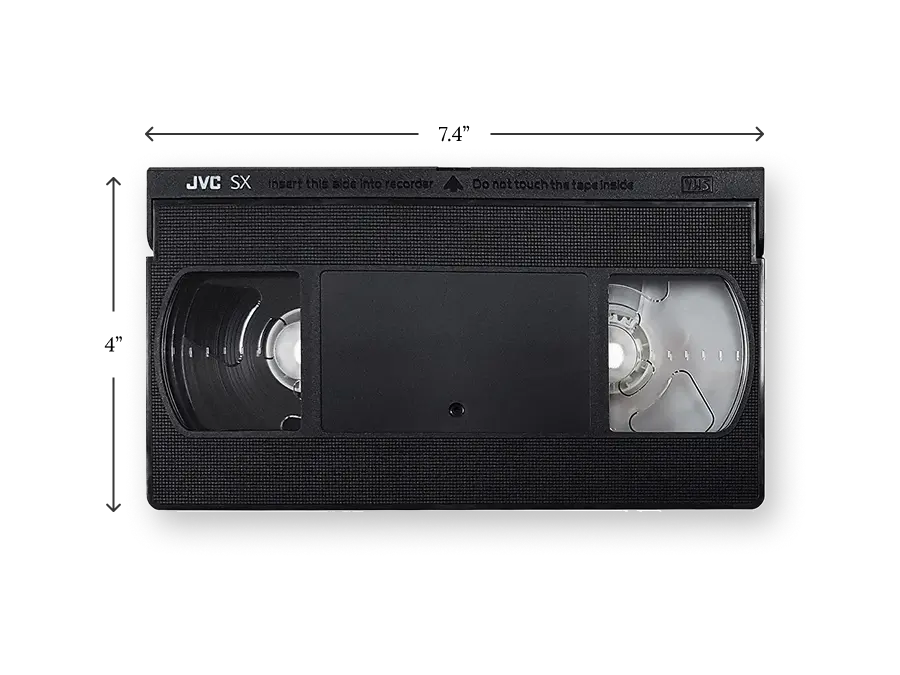
YEAR RELEASED
1976
RELEASED BY
JVC
VIDEO FORMAT
NTSC, PAL
CASE DIMENSIONS
7.1" x 4" x 1"
RESOLUTION
320 H x 240 V
The Rise and Fall of the Most Popular Videotape Format.
The Format War
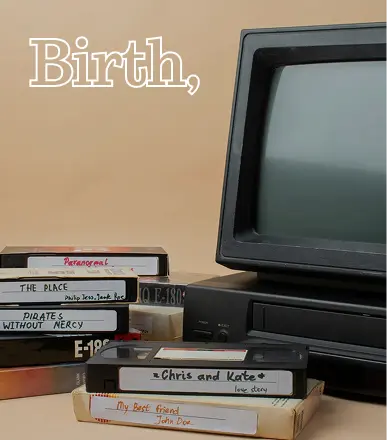
Throughout the 1970s and 1980s, VHS battled Sony's Betamax in one of technology's most famous format wars. Although Betamax delivered superior picture quality and more compact cassettes, VHS won consumers over with longer recording times, lower prices, and wider availability of rental titles. By the late 1980s, Betamax had largely disappeared from store shelves, cementing VHS as the universal home video standard.
Its Birth
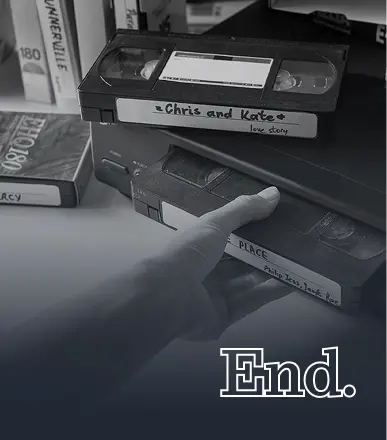
The VHS videotape format was introduced by JVC in 1976 and quickly became the dominant home video standard worldwide. Using helical scanning technology, VHS tapes offered up to six hours of recording time, making them ideal for recording TV shows and capturing family memories. By the early 1980s, millions of households owned a VHS player. In 1987, JVC released S-VHS with improved resolution closer to broadcast quality.

End of an Era
The rise of DVD technology in the late 1990s signalled the end of the VHS era. DVDs offered sharper picture quality, chapter navigation, and greater durability without tape degradation. By 2006, major studios stopped releasing films on VHS. Today, millions of VHS tapes sit in homes worldwide, holding irreplaceable family memories that risk being lost to magnetic tape decay without proper VHS-to-digital conversion.
The Compact Format
Meet VHS-C.
Honey, I Shrunk the VHS
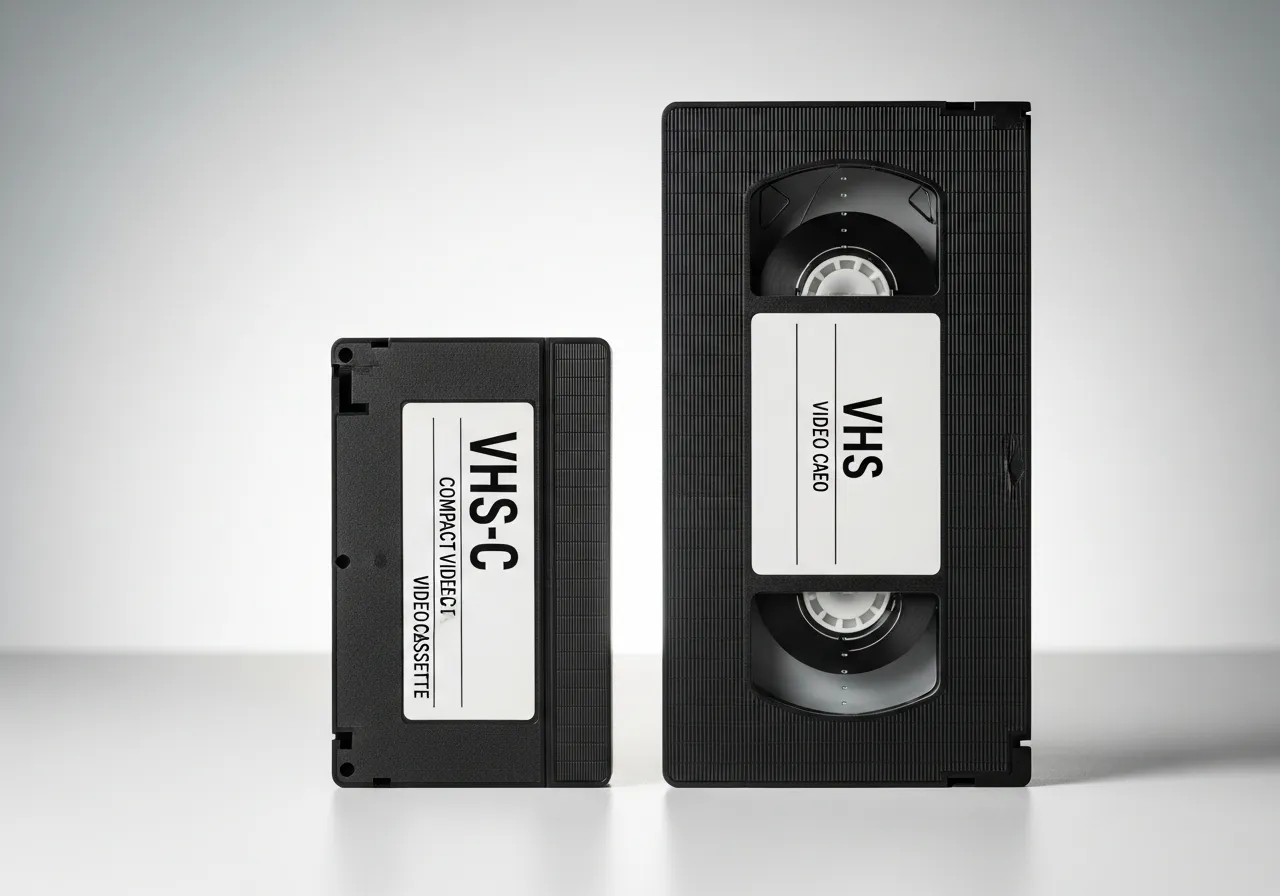
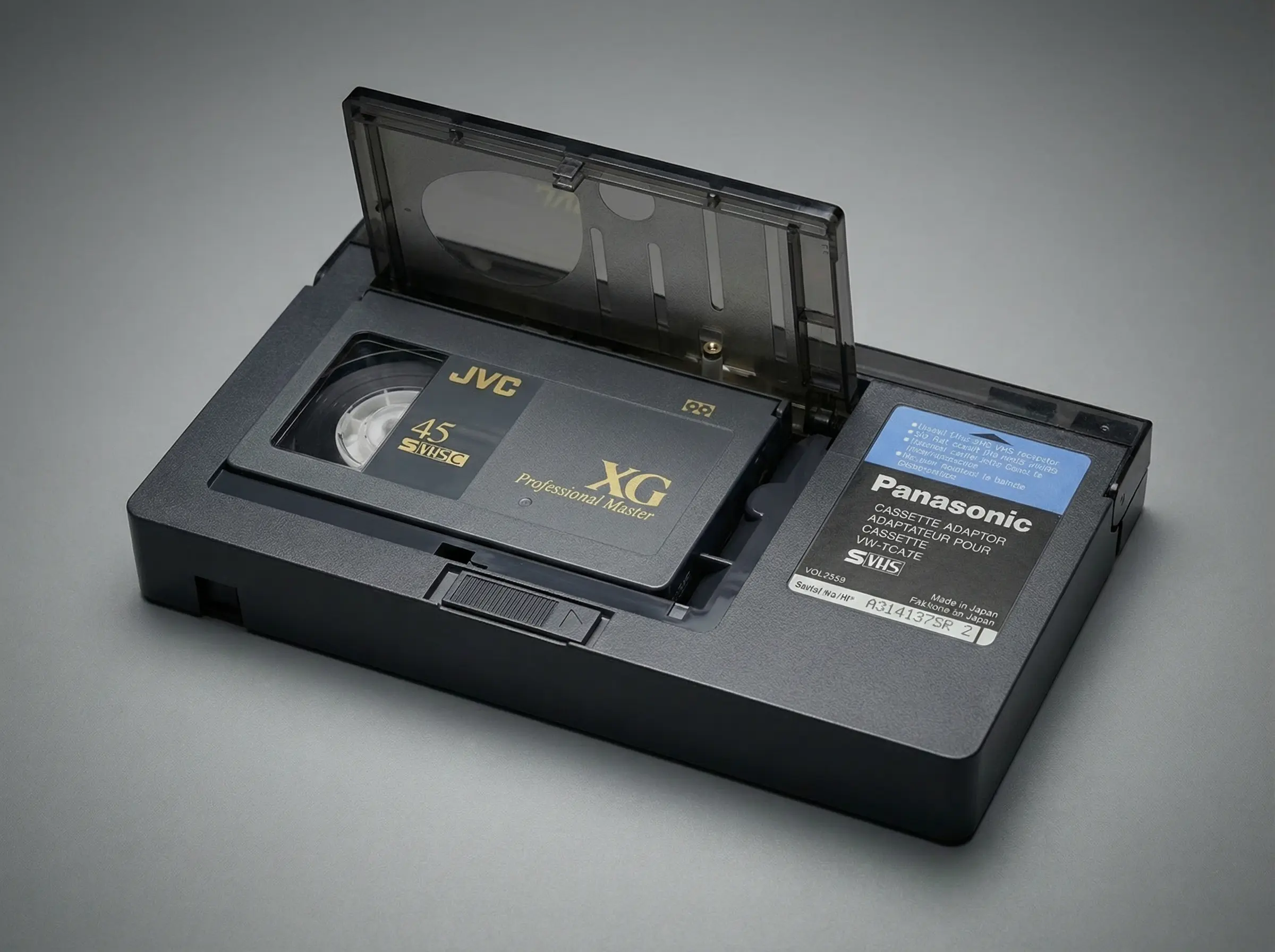
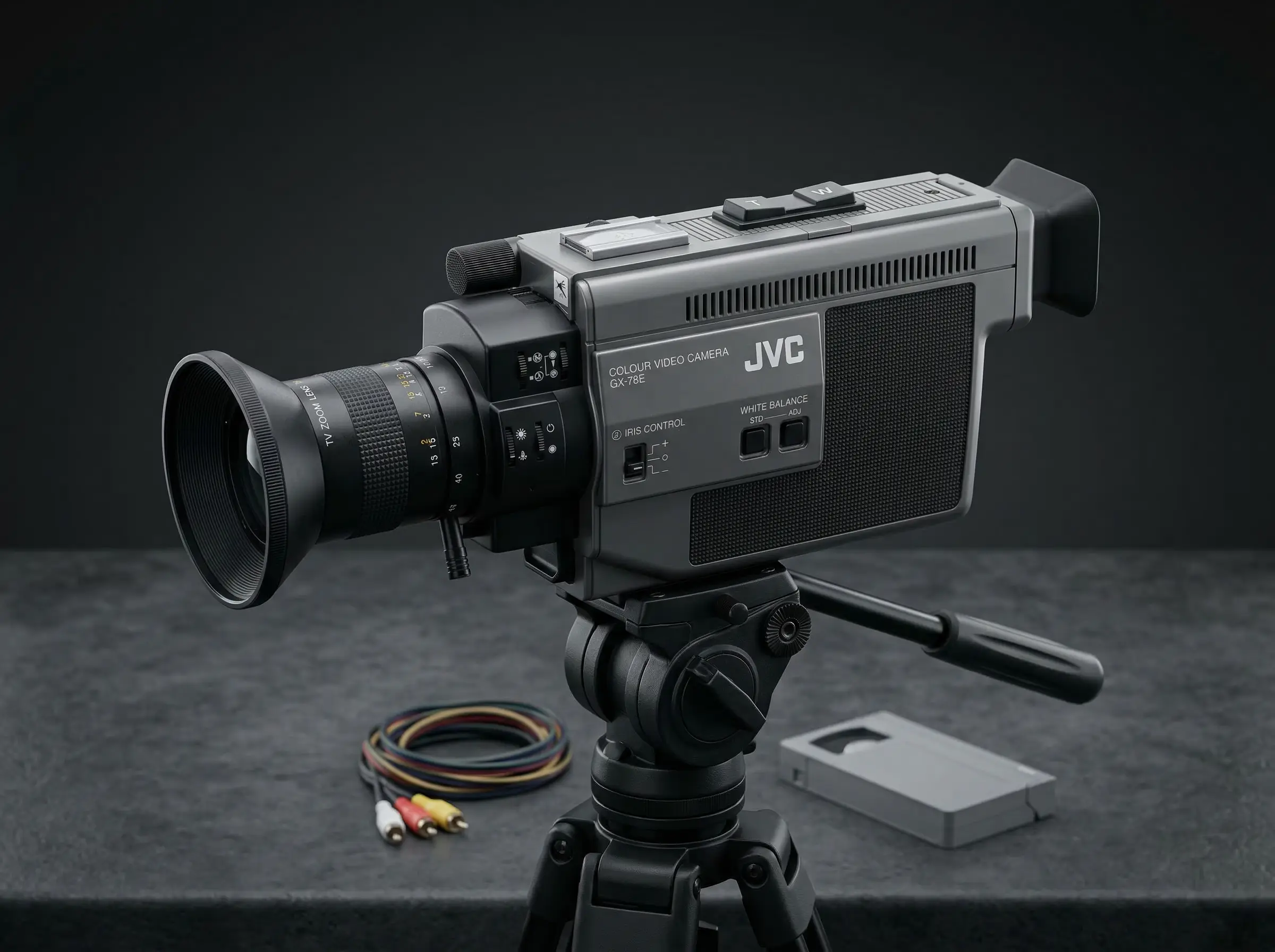
Introduced in 1982, JVC miniaturized the standard VHS cassette specifically for handheld camcorders. By packing the identical half-inch magnetic ribbon into a shell half the size, capturing family moments on the move finally became practical.
Plug, Play, No Cables Required
Its secret weapon? Full backward compatibility. A simple mechanical adapter allowed any VHS-C tape to pop right into the family's existing VCR. No special equipment or messy re-recording meant seamless integration with your living room.
Ruling the Camcorder Era
Evolving into the higher-resolution S-VHS-C, the format dominated the consumer market throughout the late 80s and 90s, holding the throne until Sony's digital MiniDV arrived in the early 2000s.
Video Quality and Recording Time
Different Recording Modes.
Three Recording Modes
VHS offers three recording modes: Standard Play (SP), Long Play (LP), and Extended Play (EP). Choosing a longer recording time affects video quality.
How long can VHS tapes be preserved?
Videotape Degradation.
Tape Deterioration
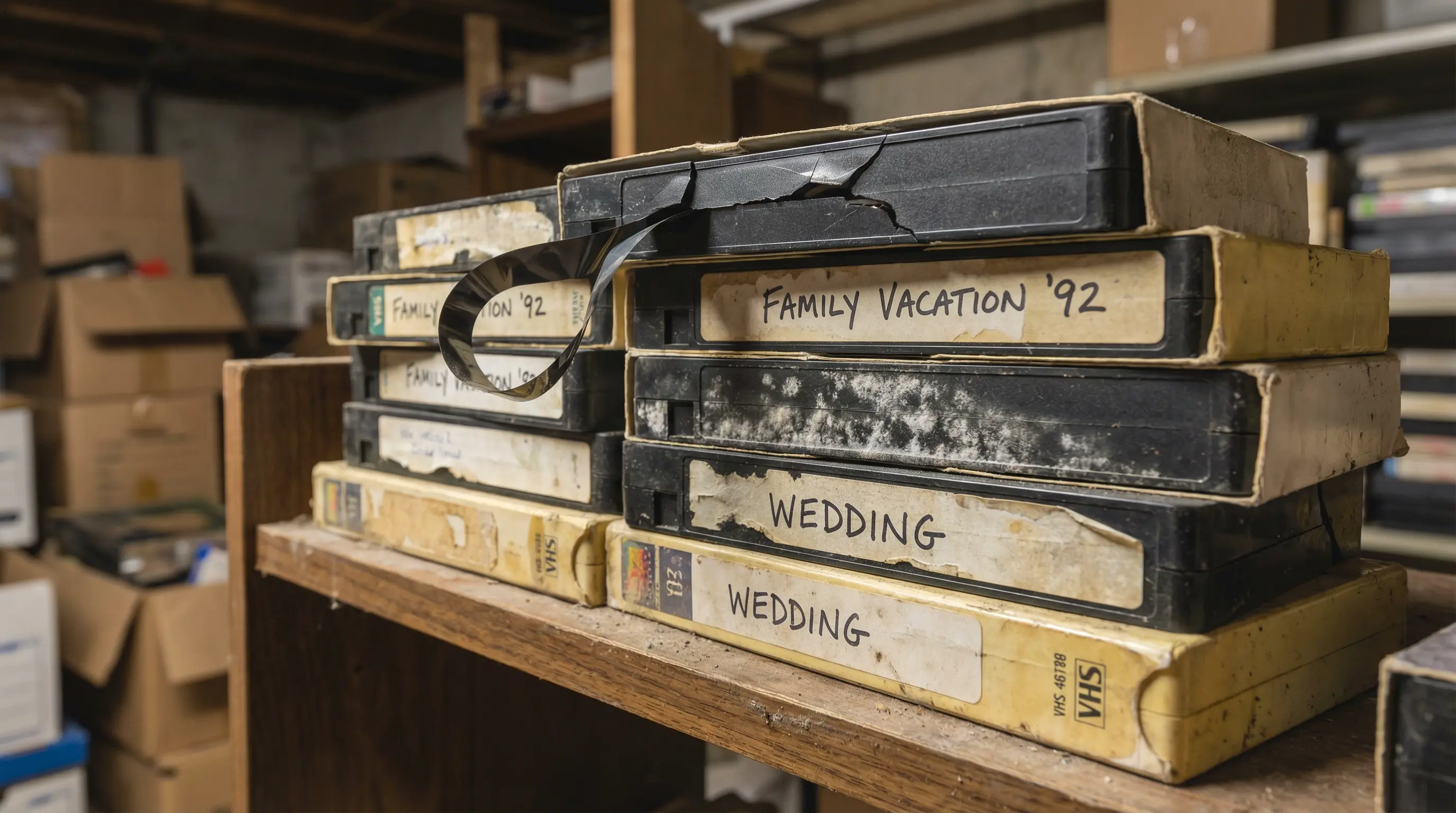
The lifespan of a VHS tape is influenced by various factors, including storage conditions, usage and the quality of the tape itself. Generally, VHS tapes will experience 10–20% degradation (such as fading, reduced audio quality, and loss of picture) within 10 to 25 years. Improper storage can further lead to issues like mold or tape breakage.
Mould or Tape Breakage
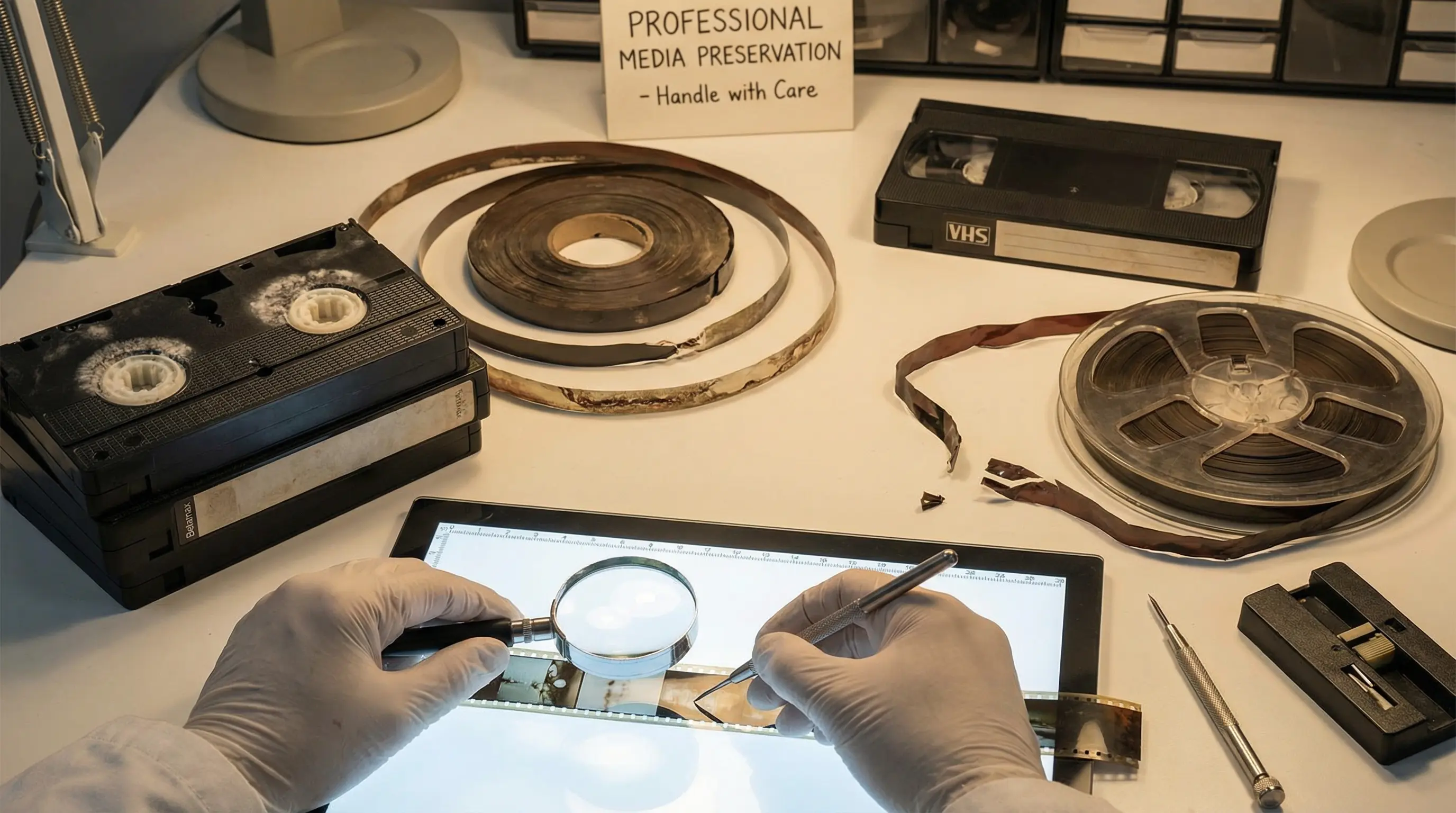
When tapes are affected by mould or breakage, making them unplayable, it's essential to seek professional help to immediately repair the tape. Repair involves minimising the degradation of the video and extending their lifespan, allowing the tape to continue being playable.
How to keep VHS tape content intact?
Extend Tape Life.
Avoid Moisture
Store tapes in a dry environment to prevent mold growth on the magnetic tape surface.
Keep in a Cool Place
Ensure tapes are kept away from direct sunlight and extreme temperatures.
Digitize Your Tapes
Converting VHS tapes to digital format allows for permanent preservation and easy sharing on any device.
Frequently Asked Questions.
Which digital format can I convert from VHS/videotape?
VHS and S-VHS tapes can be digitized into MP4 format, which is compatible with virtually all modern devices. The digital files can be delivered via cloud storage download or saved to a USB flash drive.
Can damaged or moldy VHS tapes still be recovered?
In many cases, yes. Common issues like mold growth, broken tape, adhesive erosion, and damaged cassette shells can often be repaired by a specialist before the tape is digitized. The success of recovery depends on the severity of the damage and how the tape was stored. If you suspect your tapes are damaged, it's best to have them assessed sooner rather than later, as degradation continues over time.
Explore Our Other Services.
We digitize all your analog media — mix and match in one order.

VHS / S-VHS
Est. $0.00
VHS / S-VHS