VHS vs. Betamax vs. Video-8: Understanding Your Tape Formats
Not sure what kind of tapes you have? This visual guide will help you identify every major consumer videotape format from the 1970s through the 2000s.

A Visual Guide to Every Tape in Your Collection
Most families have a box (or several boxes) of unlabeled tapes. Before you send them in for digitization, it helps to know what you're working with. Here's how to identify each format.
VHS (Video Home System)
Size: 7.4" × 4.1" × 1"
Introduced: 1976
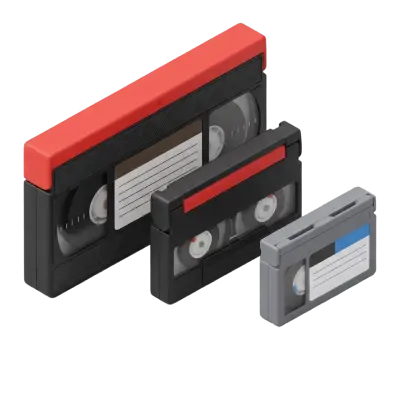
How to identify: The largest consumer tape format. If it's big enough to need two hands to hold comfortably, it's probably VHS.
VHS was the dominant home video format for over 20 years. Chances are, most of your tapes are VHS.
S-VHS looks identical to VHS but has a small "S-VHS" marking and an extra hole in the cassette housing. It records at higher quality.
VHS-C (VHS Compact)
Size: 3.6" × 2.2" × 0.8"
Introduced: 1982
How to identify: Looks like a miniature VHS tape. Can be played in a full-size VCR with an adapter.
Common in camcorders from the late 1980s and 1990s. If you had a compact camcorder, these are likely what it used.
Betamax
Size: 6.1" × 3.8" × 1"
Introduced: 1975
How to identify: Slightly smaller than VHS with a different cassette mechanism. The tape door opens from the top.
Sony's format lost the "format war" to VHS despite having better picture quality. If your family was a Sony household in the late 1970s or early 1980s, you might have Betamax tapes.
Video-8 / Hi8 / Digital8
Size: 3.7" × 2.5" × 0.6"
Introduced: 1985 (Video-8), 1989 (Hi8), 1999 (Digital8)
How to identify: Small, compact cassettes — similar in size to an audio cassette but thicker. All three formats use the same shell.
The 8mm family was extremely popular in camcorders. Hi8 was the most common. These tapes are often unlabeled, so you might need to play them to find out what's on them.
MiniDV
Size: 2.6" × 1.9" × 0.5"
Introduced: 1995
How to identify: The smallest consumer tape format. About the size of a matchbox. Has a metal sliding door.
MiniDV was the last major tape format before everything went to memory cards. Very common in camcorders from 1998–2008.
Still Not Sure?
No problem. Send us your tapes and we'll identify each one, barcode it, and catalog it before processing. You only pay for what we digitize.
Early access: 22% off orders $100+
You May Also Like

How to Transfer a CD to a USB Flash Drive: Music, Photos, and Files
To transfer a music CD to a USB flash drive, you have to rip it first: import the tracks as MP3 or AAC files with Windows Media Player or Apple Music, then copy those files to the drive. Dragging tracks straight from the disc only copies 44-byte ".cda" shortcuts that won't play, while photo and data CDs can be copied and pasted directly. A 16GB flash drive holds about 100 albums as 320 kbps MP3.

Does Walgreens Transfer VHS Tapes and Photos to Digital? What to Know Before You Decide
Yes, Walgreens transfers VHS tapes, film, photos, negatives, and slides to digital — but the work is outsourced to iMemories, not done in-store. Video converts to DVD, Blu-ray, or cloud; photos convert to USB only. Turnaround typically runs 3–5 weeks.
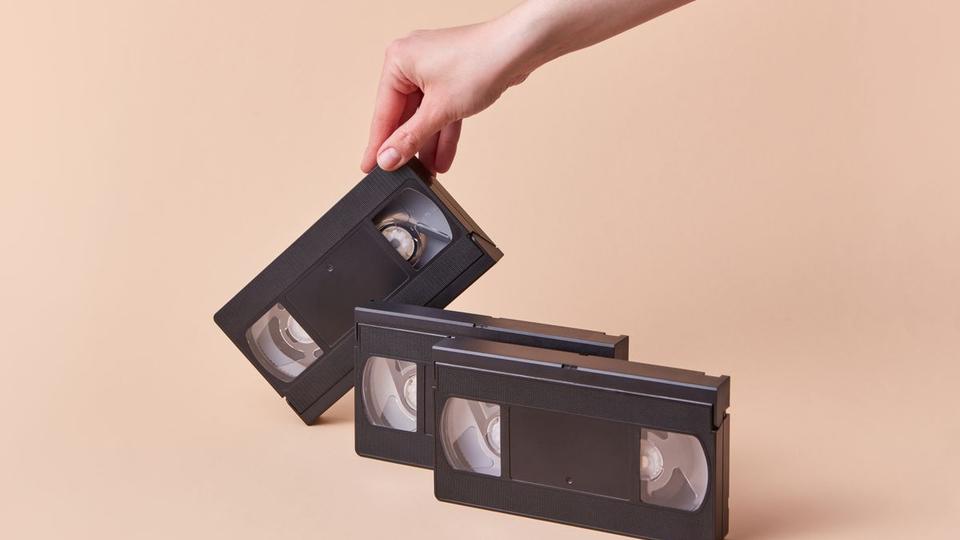
Forever Studios Reviews 2026: Is It Worth It? Quality, Pricing & Comparison
Yes, Forever Studios is a legitimate digitizing service. Based in Boca Raton, Florida, it specializes in transferring VHS tapes, camcorder tapes, film reels, photos, slides, negatives, and audio cassettes to digital formats. Most Forever Studios reviews praise the company's restoration quality and careful handling of sentimental media. The most common criticisms focus on quote-based pricing, longer-than-expected turnaround for some orders, and uncertainty over whether the Forever Gold upgrade delivers enough additional value. If preserving aging videotapes is your priority, Capture's VHS to Digital service includes published pricing, AI-enhanced restoration, and predictable turnaround times, making it easier to compare before placing an order.