How to Watch VHS-C Tapes in 2026?
To watch VHS-C tapes today, you can use a VHS-C adapter with a standard VCR, play them in a compatible camcorder, or convert them to digital using a capture device or professional service. Digitizing is the best long-term option since compatible playback hardware is increasingly hard to find and the tapes themselves continue to degrade with age.

Compact VHS tapes, or VHS-C tapes, once made it easy to capture graduations, birthdays, holidays, and everyday family moments without carrying a full-size camcorder. Today, many of those tapes still exist, but the equipment needed to play them often doesn’t.
If you’re wondering how to watch VHS-C tapes in 2026, there are four reliable options. You can use a VHS-C adapter with a VCR, play the tape in a compatible camcorder, convert it to digital yourself, or use a professional transfer service for long-term preservation.
Below, we’ll walk through how each method works so you can choose the best way to enjoy your old VHS-C tapes again.
Jump To:
How to Identify a VHS-C Tape
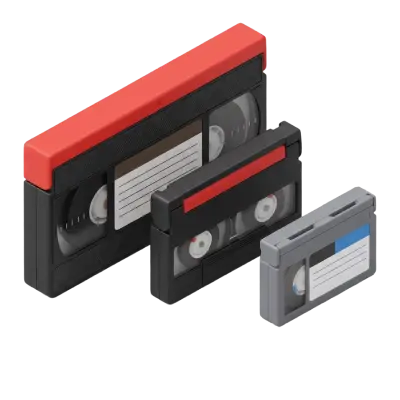
If you’re unsure whether you’re holding a VHS-C tape or another small format, the quickest way to confirm is by checking the physical build rather than relying on faded labels. VHS-C tapes were designed for compact camcorders, and their size and casing thickness make them distinct from other small video formats.

Signs you have a VHS-C tape:
- Fits completely in the palm of your hand
- Noticeably smaller and lighter than a full-size VHS cassette
- Usually labeled “VHS-C” along the spine or front sticker
- Slightly thicker plastic casing than MiniDV
- Visible side reel that can be gently tightened if tape slack is present
- Will not play in a standard VCR without a VHS-C adapter
We’ve found that people most often confuse VHS-C with MiniDV when labels have faded, but MiniDV tapes are smaller and thinner overall. Comparing casing thickness side-by-side is usually the fastest way to confirm the format.
4 Ways to Watch VHS-C Tapes
If you want to watch your VHS-C tapes, you have a few options, including using a VHS-C adapter, viewing them on a camcorder, or transferring to digital on your own or using a professional service.
Option 1: VHS-C Adapter
The first option is to use a VHS-C adapter, which was the original playback method when these tapes were first introduced. You will also need a working VHS VCR or a combo DVD/VHS player. In this setup, your VCR effectively becomes your vhs c tape player once the adapter is inserted.
A VHS-C adapter expands the smaller cassette into the size of a standard VHS tape so it can be inserted into a VCR. You can buy them on Amazon, Best Buy, and other electronics stores for around $20 to $30. To use one, insert the VHS-C tape into the adapter, close the lid securely, and then place the full-size adapter cassette into your VCR.
There are two main types of VHS-C adapters:
- Motorized adapters use AA batteries and automatically position the tape for playback.
- Non-motorized adapters require manual pressure when closing and may require tightening the internal reel before use.
In practice, older non-motorized adapters are more likely to jam if the tape is loose. Before inserting the adapter into a VCR, gently tighten the exposed white spindle clockwise to remove slack and reduce the risk of tape damage.
While adapters are affordable, they rely on a functioning VCR, andworking VCRs are increasingly rare in 2026. Even when available, aging VCRs may have worn heads or tracking issues that affect playback quality.
For best results, we recommend motorized adapters because they reduce the chance of improper tape alignment, especially with older cassettes.
Option 2: Camcorder
Another way to watch VHS-C tapes is to use a VHS-C camcorder. It will have to be a camcorder specifically made for your VHS-C videotapes, but since you have VHS-C tapes, you may already have one lying around somewhere. Even if you don’t, you can find them on eBay for around $20 to $100, depending on the model.
One advantage of this method is immediate playback. You can insert the tape directly into the camcorder and watch it on the built-in screen without needing a VCR. This makes it one of the fastest ways to check what is recorded before deciding whether to convert VHS C tapes to digital.
In many cases, original VHS-C camcorders still power on, but batteries no longer hold a charge. Expect to rely on AC power adapters rather than original battery packs, as replacements are increasingly difficult to find in 2026.
What you’ll need to connect a VHS-C camcorder to a TV:
- A working VHS-C camcorder
- AC power adapter (recommended instead of battery)
- RCA cables (red, white, yellow connectors)
- RCA-to-HDMI converter if your TV does not support RCA inputs
Most VHS-C camcorders output video through RCA cables. If your television still includes RCA ports, you can connect directly and select the proper input source. If your TV only has HDMI ports, an RCA-to-HDMI converter is required to display the footage correctly.
To begin playback, insert the tape, rewind it fully, switch the camcorder to playback mode, and select the correct input on your television or monitor.
This method is especially useful if you are looking for how to watch VHS tapes without a VCR, since it completely bypasses the need for one while still allowing full playback.

Option 3: DIY Digital Conversion
Another way to watch your VHS-C tapes in 2026 is to convert them into digital files that can be stored on a hard drive, USB device, or in the cloud. Once digitized, you can view your footage on a Mac or Windows computer, tablet, smartphone, or smart TV without needing playback hardware.
To convert VHS-C tapes yourself, you will still need a working playback device, either a VHS-C camcorder or a VCR with an adapter, plus a digital capture device. The converter connects between your playback device and your computer or standalone recording unit.
All DIY converters operate in real time, meaning a 30-minute tape takes 30 minutes to transfer. There is no fast-forward option during digitization, so converting multiple tapes can quickly become time-intensive.
There are two primary types of DIY converters:
- Computer-based capture devices that connect via USB and use recording software
- Standalone converters with built-in screens that record directly to SD cards or USB drives
For example, the Elgato Video Capture device costs $87.99 and works through a computer using dedicated software. Standalone units, such as ClearClick-style capture devices, allow you to monitor playback on the built-in screen while recording to digital format without a computer.
While DIY conversion gives you full control over the process, quality can vary significantly. Lower-cost converters often produce compressed video files with color bleed or tracking lines, especially if the original tape has aging issues. Signal instability from worn VCR heads or older camcorders can also affect clarity during capture.
Because the process is manual and hardware-dependent, some converters are better suited for users comfortable adjusting input settings, audio levels, and file formats. For those who prefer a more streamlined solution, professional video digitizing services eliminate the need for troubleshooting aging equipment.

Option 4: Professional Transfer Services
The final option for watching VHS-C tapes in 2026 is to use a professional digitizing company to convert them into digital files. Unlike adapter or camcorder playback, this method does not require you to own or troubleshoot aging equipment. Instead, your tapes are professionally digitized and returned as shareable digital formats.
Capture uses professional playback and digitization equipment to improve consistency and reduce common playback issues, such as tracking distortion or color irregularities that can appear with aging tapes.
Digital files are delivered as downloadable videos, with options for USB or DVD copies. Capture also inspects tapes during processing and can perform basic cleaning or case repairs when needed. Each order is tracked throughout the process, helping protect irreplaceable home movies from start to finish.
For families who want long-term preservation without troubleshooting outdated hardware, professional digitization offers a reliable, future-ready solution.
What Is the Best Way to Watch VHS-C Tapes in 2026?
The best way to watch VHS-C tapes depends on your goal. If you still have working equipment, an adapter or camcorder allows direct playback. DIY converters create digital files at home, but they require time, functioning hardware, and real-time transfer.
For long-term preservation and easier sharing, converting VHS-C tapes to digital is the most future-proof solution. Magnetic tape degrades over time, and working VCRs and camcorders are becoming harder to find.
Capture handles playback, digitization, and secure tracking — so your memories are preserved without troubleshooting outdated equipment.
Start your VHS-C transfer with Capture and protect your home videos before further deterioration occurs.
20% OFF + A FREE VAULT
You May Also Like

Choosing the Perfect Film Video Camera: Top 10 Recommendations for Filmmakers
Film video cameras record motion by capturing a rapid sequence of still images on photographic film — typically at 24 frames per second for cinema and 16–18 fps for home formats like 8mm and Super 8. Unlike digital video, film requires chemical development before it can be viewed, and the footage degrades over time without proper cold, dry storage.

Five Super 8 Projectors That Stand the Test of Time
Super 8 projectors operate similarly to standard 8mm projectors but are not interchangeable — Super 8 film has a different sprocket hole size and frame dimension than regular 8mm. Kodak introduced Super 8 in 1965 alongside a cartridge-loading system that eliminated manual threading. Working Super 8 projectors are available used through eBay and estate sales, though lamp replacements are increasingly difficult to source.

Hi-8 Tape Players, Converters, and Other Options to Watch Hi-8 Tapes
Hi8 tapes require compatible playback equipment, typically a Hi8 camcorder or specialized tape player. Because these devices are no longer manufactured, working units are becoming harder to find. Many people choose to digitize Hi8 tapes so the footage can be preserved and viewed without relying on aging hardware.